

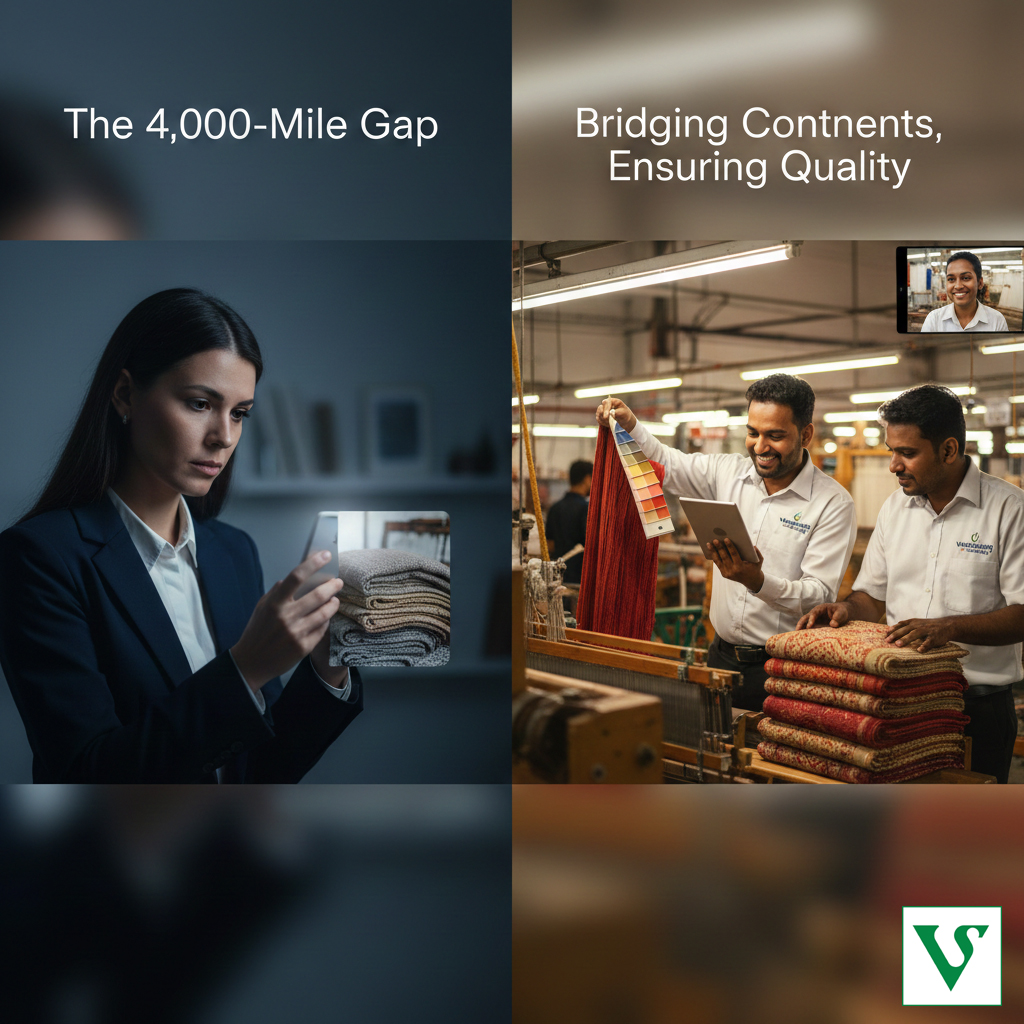
Looking to find manufacturers in India for your product? Vanguard Sourcing helps international brands, D2C businesses, retailers and importers identify potential Indian suppliers based on product construction, materials, manufacturing processes, quantity, quality expectations and target cost.
Finding a supplier name is relatively easy. Finding a factory that can make your exact product, at the required quality and quantity, with repeatable production and transparent commercial terms takes a more structured process. Our role is to help buyers narrow the supplier search, coordinate capability discussions and move suitable candidates into quotation and sample evaluation.
Manufacturer Sourcing Is More Than Searching a Directory
Online directories, trade fairs and referrals can provide supplier leads, but a listing does not prove that a company owns the relevant machinery or has the capacity to manufacture your product. Some businesses are manufacturers, some are exporters or trading companies, and some coordinate production through subcontractors. Buyers should understand the actual production arrangement before placing an order.
How We Identify Potential Indian Manufacturers
- Review the technical brief, drawings, reference images and product specifications.
- Identify the manufacturing processes and materials needed for the product.
- Map relevant Indian manufacturing clusters and supplier types.
- Shortlist companies with relevant category and process experience.
- Request capability details, product examples, MOQ, capacity and lead-time information.
- Coordinate RFQs, sample development and further supplier evaluation.
What We Evaluate Before Recommending a Supplier
Supplier suitability is specific to the product and order. A factory may be capable in one construction but unsuitable for another. Our initial evaluation can consider the following areas, subject to the information available and the agreed scope.
- Product and process experience, including comparable products made previously.
- Machinery, production flow and which operations are in-house or subcontracted.
- Available capacity, order quantity, MOQ and seasonal production constraints.
- Sample-room or product-development capability.
- Raw-material access, material controls and traceability where relevant.
- Quality-control process, inspection records and corrective-action practices.
- Export documentation experience, communication and commercial responsiveness.
Supplier Sourcing Across Key Indian Manufacturing Regions
India has multiple manufacturing clusters. Panipat and Karur are relevant to many home textile products; Tiruppur is associated with knitwear; Jaipur has suppliers across printed textiles and handicrafts; Moradabad is known for metalware; Jodhpur has furniture and wooden-product manufacturers; and Bhadohi is associated with carpet production. These are broad cluster references, not a guarantee that every factory in a location can make a particular item.
We select the search geography according to the product process, required quantity, supplier capability and commercial objective. See our Indian manufacturing hubs guide.
From Supplier Shortlist to Approved Manufacturer
Step 1 – Requirement and feasibility
We clarify product details, intended use, destination market, material requirements, target quantity, price expectation and delivery date.
Step 2 – Supplier longlist and screening
Potential suppliers are identified and screened for relevant capability. The purpose is to build a shortlist for buyer review, not to claim that every supplier has been independently audited.
Step 3 – RFQs and samples
We coordinate quotations and samples. Buyers compare samples against the same specification and record all changes before final approval.
Step 4 – Due diligence and order readiness
Additional factory assessment, document verification, testing or independent audit can be arranged where required and included in the project scope. Buyers should verify legal registrations, certificates, bank details and contract entities before payment.
Products We Help Buyers Source
Our main category focus includes home textiles, bedding, quilts, cushion covers, curtains, towels, rugs, bath mats, home décor, lifestyle accessories and selected hard goods. We evaluate each requirement individually rather than claiming universal sourcing coverage across every product type.
Frequently Asked Questions
Can you find a factory for a product from a photograph?
A photograph can start the discussion, but a reliable RFQ usually needs dimensions, material, construction, finish, quantity, packaging and destination-market requirements. We help identify missing details before requesting quotations.
Do you provide verified manufacturer lists?
We can share supplier profiles and capability information for shortlisted candidates. The level of verification depends on the work performed and should be described accurately in the supplier report. An initial shortlist is not the same as a completed factory audit.
Can you find manufacturers for low or trial quantities?
We can ask suppliers about their MOQs and pilot-order options. Feasibility depends on material minimums, setup costs, production process and the individual factory.
Explore our India sourcing agent service, sourcing services and sourcing process.
Discuss your sourcing requirement with Vanguard Sourcing. Share your product category, specification, target quantity and destination market. Contact our team to discuss the appropriate India sourcing support. You can also review our sourcing agent services in India.
From manufacturer search to an approved supplier
Finding a manufacturer and qualifying a vendor are related but different steps. Manufacturer identification creates a shortlist based on product, material, process, quantity and commercial feasibility. Before placing an order, buyers may need a factory capability assessment, sample approval and documented confirmation of quality and compliance requirements. Explore our factory audit and supplier verification support for supplier due diligence, vendor development for onboarding and improvement, and product sourcing services for coordinated RFQs and sampling. Supplier recommendations remain subject to buyer evaluation and final approval.
Manufacturer identification: a structured shortlist process
Finding an Indian manufacturer starts with a product brief and a set of qualification criteria. The objective is not to collect the largest number of factory names; it is to identify a small group of suppliers whose actual process, materials, production site, quantity range and delivery window fit the buyer’s requirement.
1. Define the manufacturing route
State the product’s materials, construction, dimensions, tolerances, finish, component list, packaging and intended use. Identify the main processes required, such as weaving, knitting, printing, dyeing, stitching, tufting, metal forming, casting, welding, woodworking, moulding, glazing or assembly. The process requirement helps distinguish a factory from a trader or a supplier that subcontracts the most important operation.
2. Research the supplier and legal entity
Capture the legal business name, registered address, GST or relevant business registration information where applicable, contact details, website, export experience and references that can be checked. Establish which entity will quote, contract and invoice. A trading office and factory may be separate entities; document the relationship and the party accountable for manufacturing.
3. Verify the physical production site
Request the actual factory address and a process flow showing in-house and subcontracted operations. Match machinery and equipment to the specification. Ask for examples of similar products and recent production evidence. If an audit or visit is needed, define the scope and verify the facility being assessed rather than relying on a company brochure.
4. Compare technical and commercial suitability
Compare capability, available capacity, minimum order quantity, material sourcing, sampling lead time, production lead time, quality systems, packing capability and communication. Quote comparisons should use the same specification, quantity, packaging and Incoterm with a named place. Identify excluded charges and the assumptions behind the price.
5. Validate before approving the supplier
Request a sample made by the intended production site using the specified materials and process. Review dimensions, materials, workmanship, colour, finish and packing. Where necessary, arrange third-party inspection or laboratory testing under an agreed method and acceptance limit. A sample approval demonstrates product development progress; it does not by itself validate every factory system or certify the supplier.
Related tools: factory audit checklist, supplier evaluation scorecard and RFQ template.