Rugs and bath mats are tactile products: customers judge them by appearance, hand feel, performance, durability and how well they work in the intended space. India has established manufacturing capabilities across woven rugs, dhurries, tufted products, bath mats and selected natural-fiber floor coverings. For D2C brands, the key is to match the product brief to the right construction and verify that production can reproduce the approved sample.
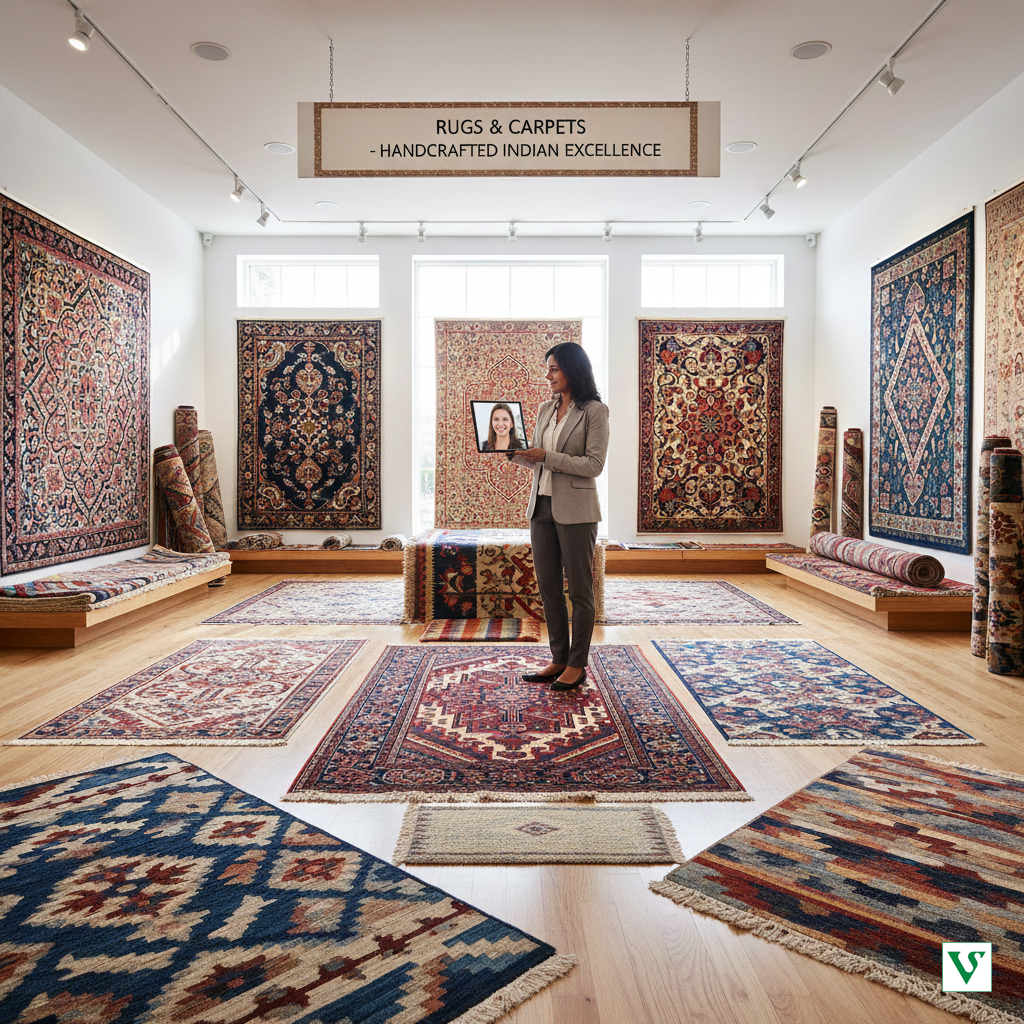
Understand the construction before you source
A rug can be woven, tufted, hand-knotted, braided, printed or made using other techniques. Bath mats may use cotton, polyester, chenille, microfiber, coir or blended constructions, with different backing and finishing options. Construction affects appearance, cost, weight, durability, shedding, care instructions and the machinery required. Write the construction into the technical pack rather than relying on a product photo alone.
Define the performance specification
- Fiber composition, yarn type, pile height, weight or GSM and finished dimensions.
- Backing material, adhesion method, anti-slip performance and care instructions.
- Color standards, pattern placement, edge finishing and acceptable dimensional tolerance.
- Shedding, colorfastness, wash performance and other tests relevant to intended use.
- Packaging format, folding or rolling, labels, carton quantity and barcode.
Qualify the factory and any subcontractors
Ask which processes take place in-house, such as yarn preparation, weaving or tufting, dyeing, printing, backing, finishing and packing. Where processes are outsourced, establish who controls quality and how batches are traced. Check machinery, capacity, sample quality, inspection records and ability to handle the brand’s forecast.
Test packaging and shipping readiness
Rugs can be bulky and bath mats may be compressed or folded for shipment. Packaging must protect the surface and backing while meeting the brand’s warehouse, parcel or retail requirements. Validate packed dimensions and weight because they can influence freight and fulfilment cost. Confirm whether compression or folding causes permanent creasing or shape distortion.
Build quality checks around the risk
Inspection should cover dimensions, appearance, pile or loop consistency, backing, edge finishing, stains, loose threads and packing. Testing depends on materials and destination requirements. Agree defect classifications and sampling plans in advance, and use a final inspection before dispatch where the order risk warrants it.
Use sourcing to protect customer experience
The right rug supplier is not simply the one with the lowest price. A suitable partner should be able to deliver the approved construction, quality, packaging and repeatability at the brand’s required MOQ and delivery schedule. Compare India with China, Vietnam or other markets product by product, using landed cost and sample results.
Planning a new product or supplier programme? Vanguard Sourcing supports D2C brands, retailers and importers with supplier identification, product development, merchandising, production coordination and quality follow-up in India. Discuss your sourcing requirement or review our India sourcing support.
Related sourcing guides: For buyers developing a broader home collection, see private-label home textiles in India, quality control across Asian suppliers, and India sourcing for US D2C brands.